



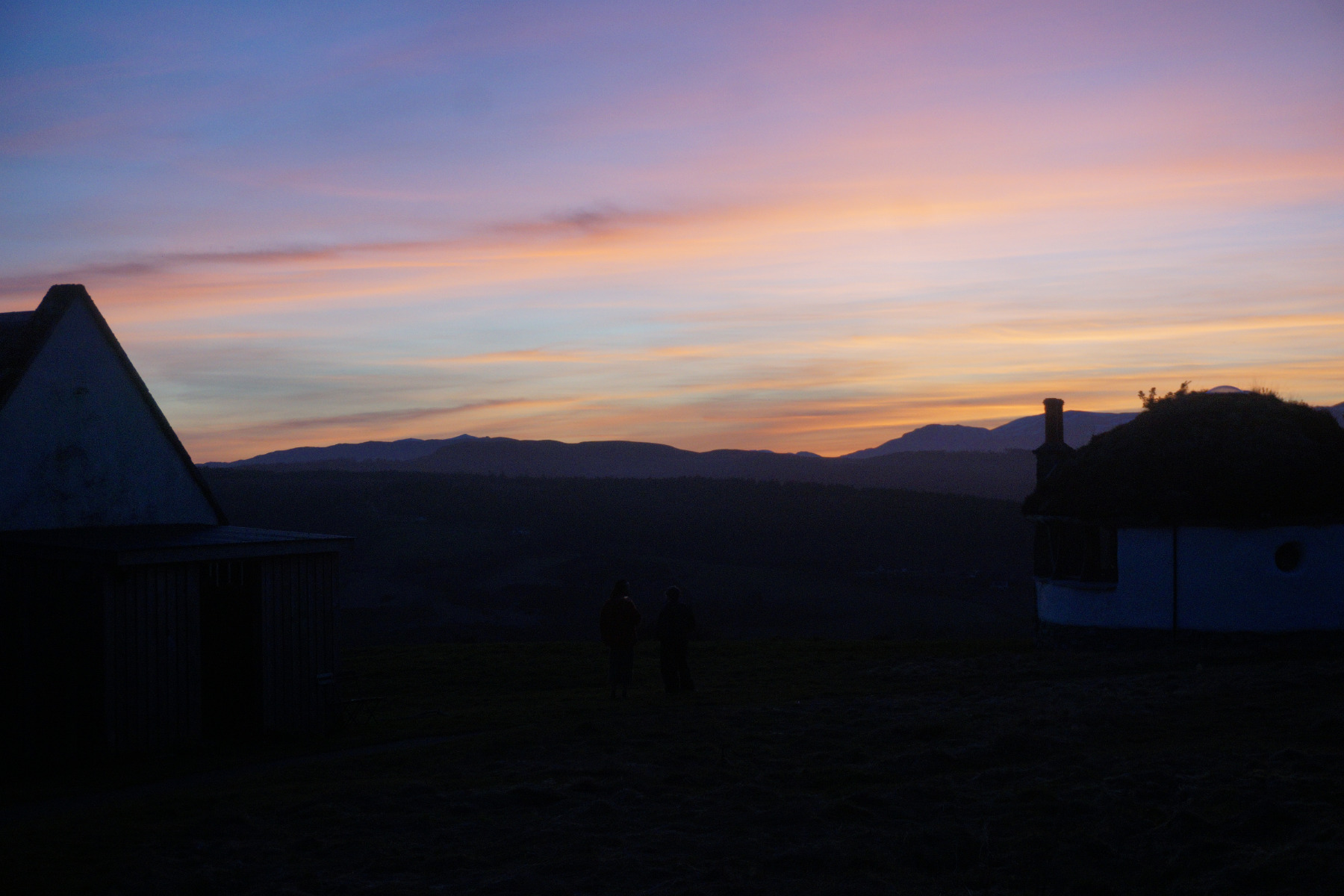
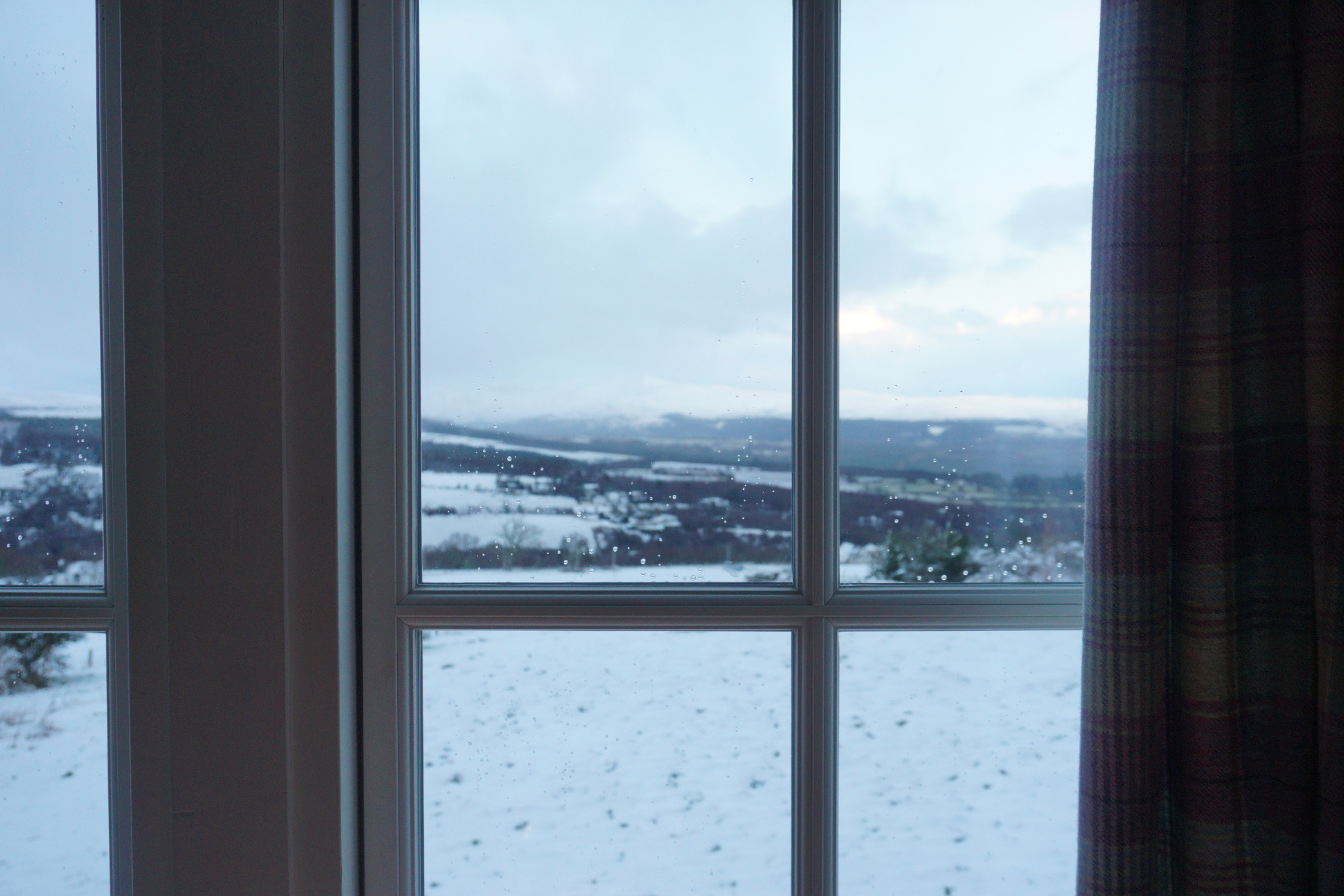
Half-way through my four-week residency at Moniack Mhor, I sent an email to my best friend. ‘Dearest Irene,’ I wrote: ‘I am very well. The walls of my room are covered in wood panels and my desk is facing a window, which is facing the valley.’ I assumed Irene’s week, down south, had turned with the spring equinox, so I went on to describe the view outside of my bedroom. The hills still had snowy noses, the daffodils hadn’t flowered yet; I couldn’t find the beaver, only wood chips after them; I kept a book about the birds of Scotland on my desk. I was sharing a kitchen with the northernmost branch of the Scottish poetry library, which I specified to Irene too, as we would often cook and talk about books together. I shared with her that I found living above a library that follows no obvious categorisation reassuring. The kettle was oddly slow as well, so I had taken on reading one, two or three poem(s) while I waited for the water to boil. I was very well; I was walking, writing, working. I was focused.
What is a writing residency? It is a concrete solution to seeking a room of one’s own. It is about accessing a space to write for a limited amount of time, as routinely described online. Quick internet research about what to pack for a writing residency will mention things like ‘your favourite writing mediums’; ‘an object that will remind you of your home’; ‘comfortable clothes, slippers’, all of which I brought and used during my time at Moniack Mhor, but they hadn’t prepared me for the experience. I had mimicked residencies before, moving my desk in a different corner of my flat for “writing days away from home”, fulfilling pet-sitting and flat-sitting duties for friends, but this was my first catered residency. I was able to attend thanks to the generosity of the Jessie Kesson Fellowship, which I was awarded in 2026. This meant that my travel expenses and accommodation were covered, and that I received a weekly stipend to write. As a freelancer, the latter was a prerequisite for me to afford taking time off from paid work, as well as from chasing invoices and new projects. If you asked me again what a writing residency is today, then I would tell you that the ground zero for a writing residency is to switch gear. Writing doesn’t fit around life anymore; life gravitates around your writing, for the time being.
‘The writing is slow too,’ I opened my second paragraph to Irene. ‘And that is the real magic,’ I insisted. Irene is my first reader, so I told her about the editorial work I had completed on my novel during the first two weeks, and what I had in mind the last two weeks.
To that end, when, instead of what to pack for a writing residency, is the question to ask yourself. The work will become your main subject, so it must be sitting at a stage where you fancy spending uninterrupted time with it. It could be that you use this opportunity to read and research, two fundamental requirements for any projects to see the light, yet two activities that are outcast by daily chores and commitments often, or you may decide to have a go at a first draft. This is brave, in my opinion, but I witnessed plenty of writers doing just that and finding the process rewarding. I dedicated my fellowship to carry a structural edit on a work-in-progress. I wanted to be ambitious, challenge myself; a deep dive, so deep I wouldn’t have managed to jump in if life had got in the way.
There isn’t a single route for a writing residency. However, if it is catered, you must consider the social aspect. You will meet new writer friends. People who write around the same topics as you, but in a different genre; people who write radically different books than you; scriptwriters, novelists, spoken word artists, non-fiction writers; people at different stages in their career, but storytellers always. You will share meals and walks in nature together. You will read and write silently next to each other. You may discuss your research, seek one’s advice, and even read extracts from your manuscript out loud to others. You may not share anything at all with some of the writers on site, and that will be fine too.
Still writing to Irene, I took some time to describe the kitchen in the main cottage. I missed her cooking dearly, but I wasn’t hungry. The kitchen at Moniack Mhor was always busy with people and fresh bakes, and it rapidly became my lighthouse. The tarts were crustless but generous with winter vegetables, the frittata was steamed with plenty of mushrooms and rocket was mixed with beetroots and lentils. The salads were varied in taste, colours and textures; the breads were flat and crusty and wholemeal and white, sometimes toasted and topped with garlic butter or za’atar spices; homemade pickled onions and pickled beetroots, plenty of fresh fruits available. Winter vegetables traybakes, balsamic glazing; baked tomatoey orzo, redder parmigiana; Curry Mondays and Falafel Fridays. Sweet potatoes and ginger soup, leftover sandwiches at the weekend, of which there were plenty always. And, catching up with Millie by the pantry, with Elliot by the fruit bowl, serving myself seconds of Kit’s roasted vegetables tart, talking about how Fran repurposed a flourless vegan carrot cake into an ice-cream, then perking a scoop of vanilla ice-cream with Alice’s roasted cherries and tangerines, the staff of Moniack Mhor became my trusted lighthouse keepers.
Could someone ring the bell, please? At the dinner table, I was grateful to be eating meals with people who had no context about me and for whom I had none either, eating and talking outside of the social frameworks that would shadow us otherwise. It has been enriching, challenging at times but mostly illuminating, and I look forward to discovering what new friendships may bring.
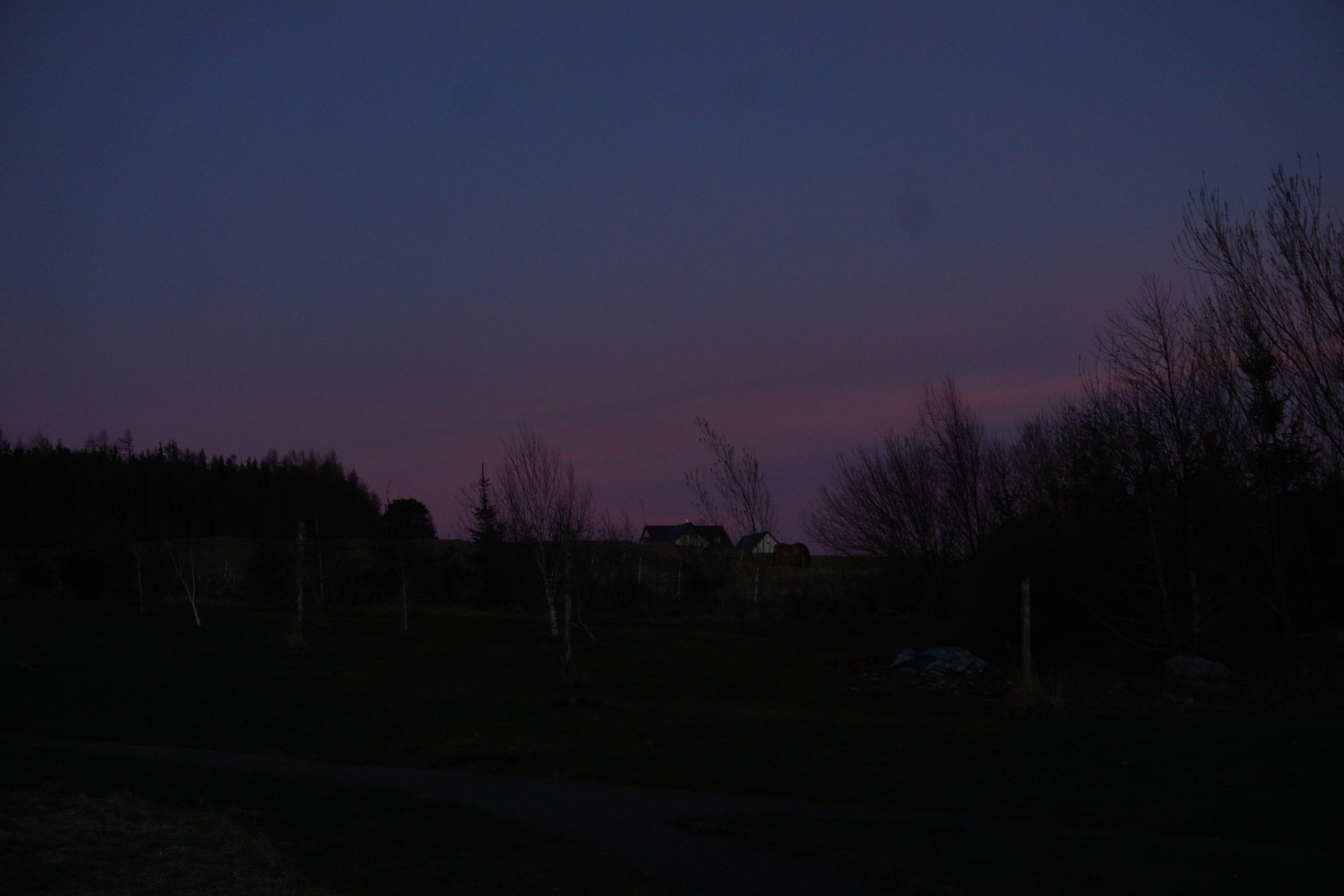
‘I am serene,’ I wrote to Irene among other personal observations in my closing paragraph. I was scared about leaving Moniack Mhor again, which I finally confessed to my new friend Pauline on my last Sunday there. I had planned my final week carefully, allocating enough room to do each one of my favourite walks and runs one more time, to say goodbye to the cows and my favourite tree, to spend time with so and so, to catch the sun rising here and the sun setting there. Then, Pauline smiled and spoke wisely: ‘If it takes one week to settle somewhere new,’ she said, ‘it often takes one week to leave somewhere too.’
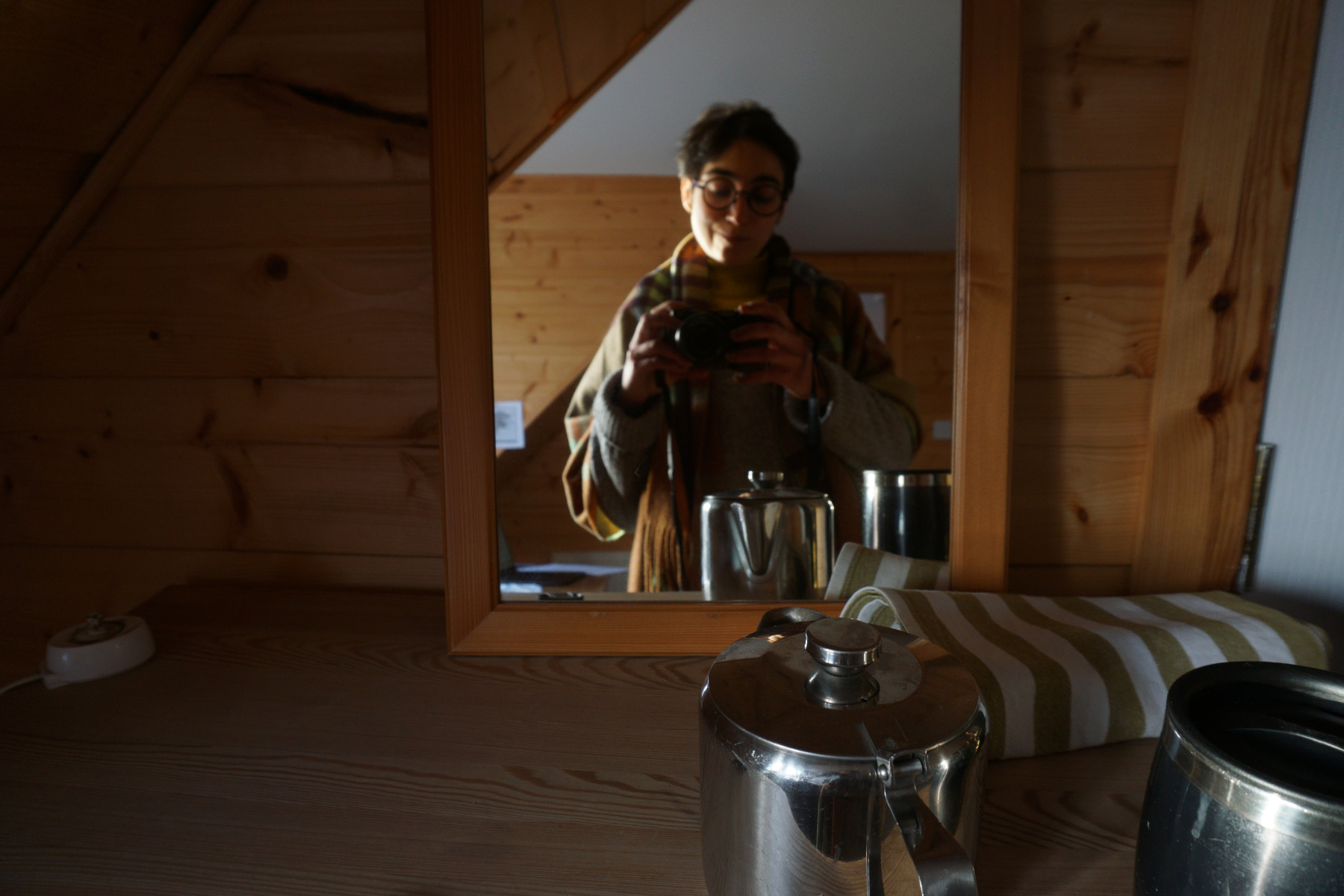
It did, then I left. I now have a manuscript for a novel I am proud of and hope to share with readers in the future, and twenty-six photos to look back at. Inside a room of my own, somewhere outside of Inverness, at a centre for creative writing located in the Highlands, above Loch Ness and called Moniack Mhor, I committed to take one photo of my desk every day. I used my camera as I didn’t have a smartphone and, more often than I would like to admit publicly, as I turned away from the desk to place my camera back on the chest of drawers where I stored it, I captured myself in the mirror above it.
Looking back at me looking at myself, my desk unmoved behind me, a desk I only was able to access thanks to a grant named after another writer, I wondered what it meant to be a writer drafting a novel at Moniack Mhor in 2026, in the margins of Jessie Kesson.
Jessie McDonald was born illegitimately in 1916, in a slum near Inverness. At the age of ten, she was taken from her mother, who worked as a domestic servant and turned to prostitution to feed her family and whom Jessie loved. She lived in an orphanage for the following six years, where her academic talents were noticed but left unexplored, until she was sent into domestic service. After a breakdown, Jessie spent a year in Aberdeen’s Royal Mental Hospital. She then worked on a croft on the shores of Loch Ness; the natural environment helped her heal and inspired her writings. She also met her husband, farmer John Kesson, and the couple spent twelve years as farm tenants, with Jessie writing for various magazines and the BBC on the side. In 1947, the couple and their two children moved to London so Jessie Kesson could pursue her writing career. Jessie’s work centres around the conflicts within ordinary women’s lives, and she grew to include nature writing, poems and novels such as The White Bird Passes (1958), Glitter of Mica (1963), Another Time, Another Place (1983) and Where the Apple Ripens (1985). Jessie Kesson also authored over one hundred plays for BBC radio, and she contributed to and produced Woman’s Hour on BBC Radio 4. Jessie died on the 26th of September 1994, six weeks after her husband John, and their ashes were released on the banks of the Loch Ness.[1]
During my last week as a Jessie Kesson Fellow, I read The White Bird Passes. This is the story of Jane MacVean, who is growing up on the poor and crowded ‘Lane’ of a Scottish city in the 1920s. The Lane is the only home Jane has known, and she is happy there, until the Cruelty Man arrives. Kesson’s writing contains restraint, humour and insight, and this coming-of-age novel of deprivation reminded me of one of my favourite authors, Natalia Ginzburg, for her heated, domestic and political short novels. The two are great women writers of subtle ironies.
Before closing the door of my room one more time, and returning The White Bird Passes to one of Moniack Mhor’s library shelves, I noted the following quote in my notebook:
It was spring along the road to Grandmother’s country. Not the dusty, daffodiled, yellow spring that Jamie glimpsed on the barrows in High Street, but a spring that was sharp and white. Star of Bethlehem flowers clustered together in groups, like milestones flashing along the way. Hawthorn wound itself in thorny whiteness, smelling like heartbreak, if heartbreak could smell. The great fir wood of Laveroch shadowed the road; yellow primroses and blue vetch lost their own colour in its shadow, pale, like the wood’s own wild, white anemones drifting down the banks.
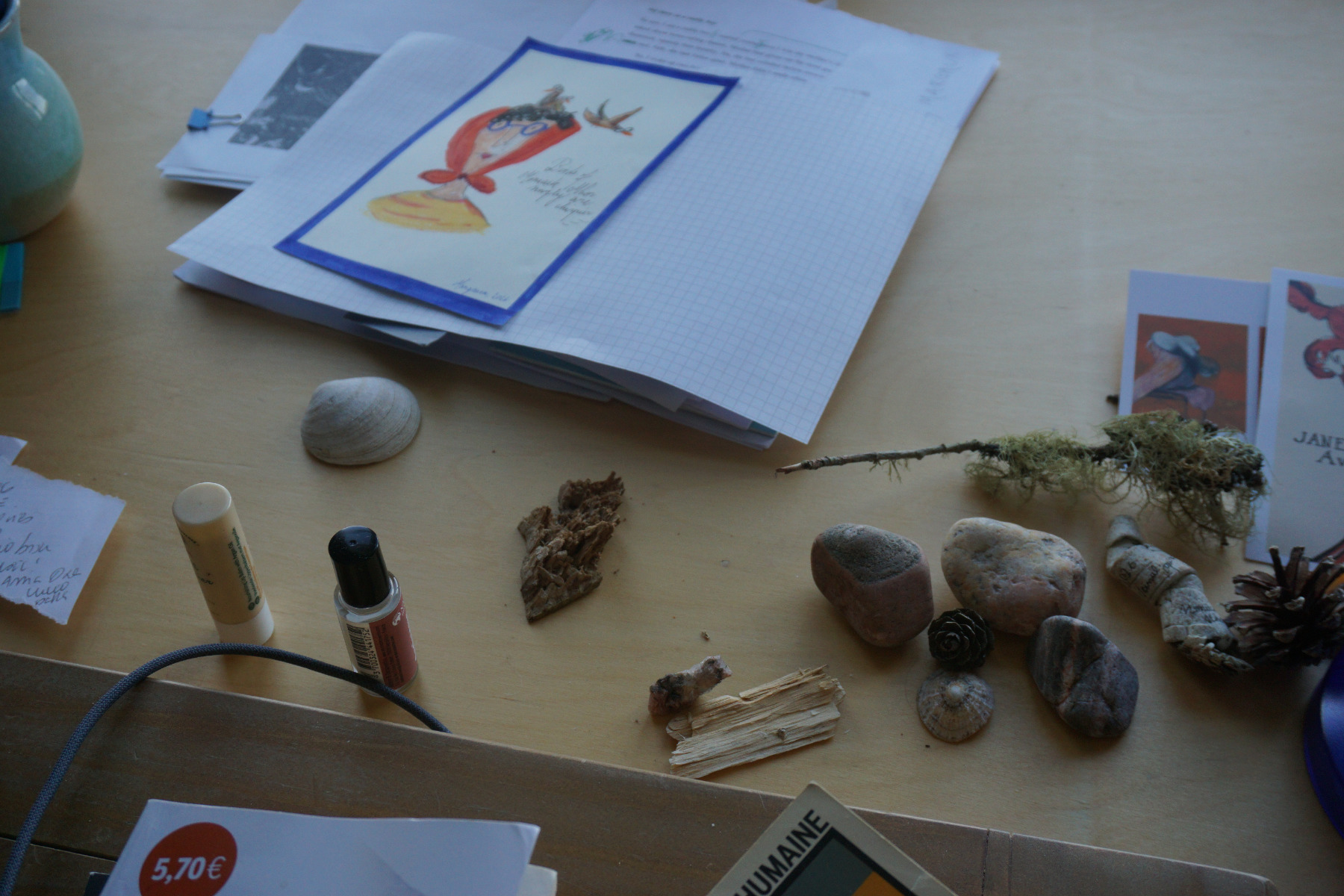
Today, as I type this, there is glitter of mica spread on my desk in Glasgow. I had never seen such a shimmer, which is produced by ground mica mineral flakes, until a fellow writer picked a handful on their daily walk and brought it back to Moniack Mhor. They left it on the dining table – “in honour of this year’s Jessie Kesson fellow, Margaux,” written on a loose sheet of paper underneath it. I grabbed some, returned to my desk for a couple of hours, then I came back to the main cottage on time to break bread with my fellow residents. I was feeling hopeful and inspired, grateful.
Margaux